
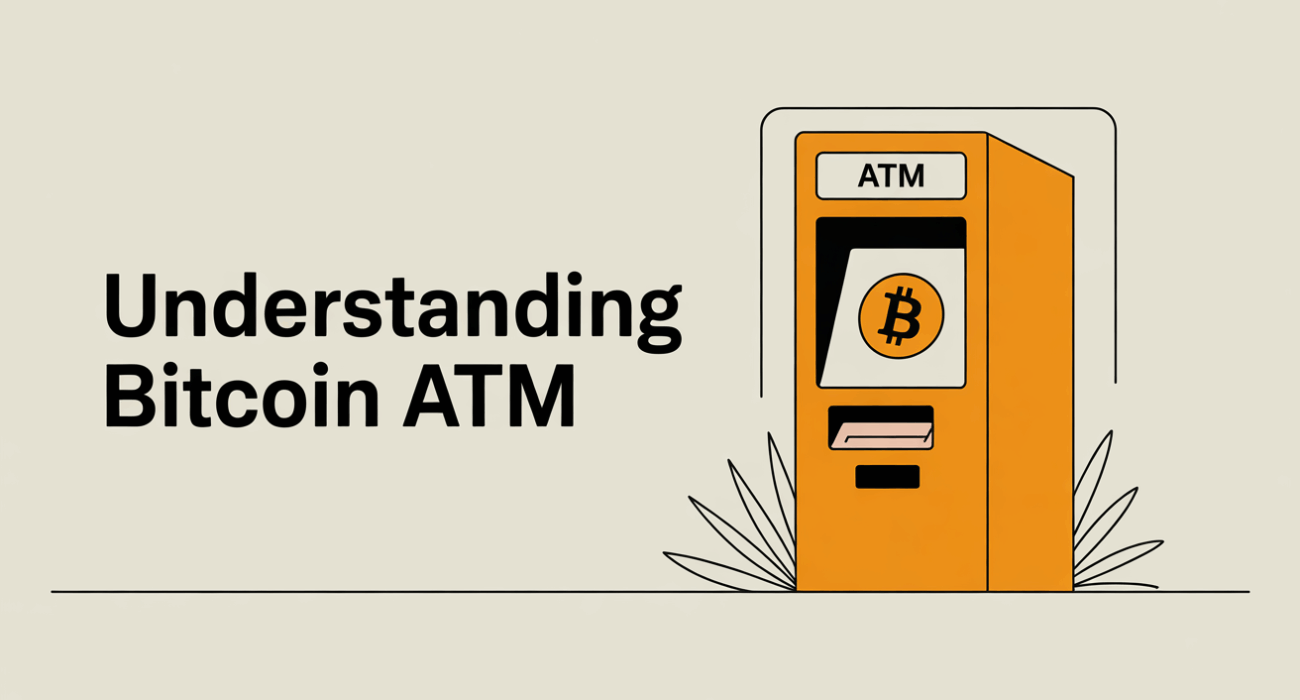
Understanding Bitcoin ATMs starts with seeing them as simple, physical gateways between cash and Bitcoin [Bitcoin](pplx://entity_chip/d023ec04), designed for people who want a fast, familiar, in-person way to buy or sell crypto without learning complex online trading platforms. This guide explains what Bitcoin ATMs are, how they work, what they cost, how to stay safe, and how to actually use one in Canada and beyond, with a special focus on finding nearby machines and using Bitcoiniacs locations.
Key takeaways of Understanding Bitcoin ATMs
-
- Bitcoin ATMs are internet-connected kiosks that let you buy—and in many cases sell—Bitcoin with cash or debit in a few minutes, using your own crypto wallet instead of a bank card linked to a bank account.
-
- Fees at Bitcoin ATMs are usually higher than online exchanges, with explicit transaction fees plus embedded spreads that can push the effective cost into double digits, especially on small purchases.
-
- Bitcoin ATMs are popular because they are fast, familiar, and cash-friendly, but they also carry risks like scams, unlicensed operators, and limited consumer recourse once a transaction is sent.
-
- Vancouver was home to the world’s first widely recognized Bitcoin ATM in 2013, helping make Canada an early leader in the cash-to-crypto space.
-
- Bitcoiniacs offers practical “find a bitcoin atm near me” coverage and local pages for buying and selling Bitcoin in Richmond, Burnaby, Toronto, and other Canadian cities, turning education into real-world access.
Table of contents
- What Is a Bitcoin ATM?
- How Bitcoin ATMs Work
- Types of Bitcoin ATMs
- Bitcoin ATM Fees and Limits
- Why Use a Bitcoin ATM Instead of an Exchange
- Live Bitcoin Price and Market Links
- How to Find a Bitcoin ATM Near Me
- Step-by-Step: How to Use a Bitcoin ATM
- Safety, Compliance, and Risks
- Canada’s First Bitcoin ATM and the Vancouver Story
- How to Buy and Sell Bitcoin with Bitcoiniacs
- Frequently Asked Questions About Bitcoin ATMs
What is a Bitcoin ATM?
A Bitcoin ATM is a kiosk that allows you to buy, and often sell, Bitcoin using cash or debit, sending the purchased cryptocurrency directly to a wallet you control rather than to a bank account. Instead of being run by a bank, these machines are operated by crypto service providers who connect the machines to the Bitcoin network and to liquidity sources so they can fulfill your order at real-time prices.
Unlike traditional ATMs that access bank systems to move fiat money between accounts, Bitcoin ATMs are gateways into digital assets and do not typically let you check bank balances or move funds between bank accounts. Many machines focus on cash-to-crypto, while more advanced or “bidirectional” models can also convert crypto back into cash.
How Bitcoin ATMs work
Bitcoin ATMs follow a predictable process: you choose whether to buy or sell, verify your identity if needed, specify an amount, connect your crypto wallet, and then insert cash or authorize a payment. The machine calculates a live rate based on real-time Bitcoin prices, adds its fee or spread, and then either sends Bitcoin to your wallet or prepares to dispense cash if you are selling.
Behind the scenes, the kiosk talks to the operator’s backend servers, which integrate with exchanges and blockchain nodes to lock in a price and broadcast your transaction to the Bitcoin network. Settlement times can vary, but users typically see funds in their wallet after the transaction is confirmed on the blockchain, while cash withdrawals are usually dispensed once the machine detects that the transaction meets the operator’s confirmation policy.
Types of Bitcoin ATMs
Buy-only Bitcoin ATMs
Buy-only machines let you insert cash or pay with debit to buy Bitcoin, sending it directly to a wallet address you provide. These are common in retail environments where buyers want a simple way to get started, and they often support smaller transaction sizes suitable for beginners.
Bidirectional Bitcoin ATMs
Bidirectional Bitcoin ATMs support both buying and selling, allowing you to convert Bitcoin to cash and cash to Bitcoin in the same kiosk. These machines usually require more rigorous identity checks, especially for sell transactions, because they are acting as cash-dispensing points and must comply with stricter anti-money-laundering rules.
Single-coin vs multi-coin machines
Some kiosks only support Bitcoin, while others allow you to buy and sell multiple cryptocurrencies in addition to Bitcoin. Multi-coin machines expand functionality but also increase complexity, making clear on-screen instructions and fee disclosures especially important for new users.
Bitcoin ATM fees and limits
Bitcoin ATMs charge higher fees than typical online exchanges because they provide cash access, convenience, compliance overhead, and physical infrastructure. Fees usually appear as a combination of a visible percentage or flat fee plus an exchange-rate spread—meaning the price you get at the machine can be several percentage points above or below the mid-market rate.
Many machines impose per-transaction and daily limits that can vary by jurisdiction and operator, and these thresholds often determine when you must complete identity verification. Lower limits may require only phone verification, while higher tiers may require government ID scanning or additional customer information to satisfy know-your-customer (KYC) requirements.
Why use a Bitcoin ATM instead of an exchange?
People choose Bitcoin ATMs because they are fast, familiar, and cash-friendly, which is especially appealing for users who do not have or do not wish to use traditional bank accounts or credit cards for crypto purchases. The process of walking up to a kiosk, scanning a QR code, and feeding in banknotes feels similar to using a standard ATM, lowering the psychological barrier to entry for first-time buyers.
For some users, privacy is also a factor; depending on the jurisdiction and the amount being transacted, they may be able to complete smaller purchases with less information than a full online exchange account would require. However, as regulators increase oversight, more machines require some combination of phone, ID, and wallet verification, so the convenience must be weighed against growing compliance requirements and higher transaction costs.
Live Bitcoin price and market links
Bitcoin ATM operators reference live Bitcoin prices from market sources to calculate the fiat amount you must pay or will receive. To understand whether a kiosk’s rate is reasonable, it is smart to compare the machine’s quote with reputable price trackers such as:
-
- Coindesk’s Bitcoin price page for live BTC/USD rates and charts.
-
- CoinMarketCap’s Bitcoin overview, including market cap, price history, and dominance metrics.
-
- CNBC’s Bitcoin price quote pages, which show live and historical pricing.
Checking these references on your phone before confirming a Bitcoin ATM transaction helps you estimate the spread and decide whether the convenience is worth the extra cost.
How to find a Bitcoin ATM near me
To “find bitcoin atm near me” or “find a bitcoin atm,” many users rely on locator services, map searches, and operator websites that list locations. Bitcoiniacs provides an ATM locations page that organizes kiosks by city and region in Canada, making it easier to identify nearby machines with known operators and consistent user experience.
Using a trusted operator’s locator rather than only generic search results reduces the risk of landing at an unlicensed machine or a kiosk with unclear fee disclosures. It also allows you to plan your visit by checking hours, supported services (buy versus buy/sell), and the currencies accepted—information particularly useful if you are traveling or visiting a new area.
Step-by-step: how to use a Bitcoin ATM
Before you go to the Bitcoin ATM
-
- Install a reputable Bitcoin wallet app on your smartphone and create a new wallet if you do not already have one.
-
- Back up your wallet’s recovery phrase securely and never share it with anyone, including ATM operators or support staff.
Buying Bitcoin at a Bitcoin ATM
-
- At the machine, select “Buy” or “Buy Bitcoin” and choose your purchase amount or range.
-
- Complete any required verification, such as entering your phone number for a one-time code or scanning your ID for higher amounts.
-
- When prompted, open your wallet app and present your receiving address QR code to the ATM’s scanner.
-
- Insert cash bills into the machine and review the transaction summary, including the fee and the amount of Bitcoin you will receive.
-
- Confirm the transaction; the machine will send Bitcoin to your wallet, and you should see a pending transaction that confirms after the network processes it.
Selling Bitcoin at a Bitcoin ATM
-
- For bidirectional machines, choose “Sell” or “Withdraw” and specify the amount of cash you want to receive.
-
- The machine will display a QR code or receiving address; send the specified amount of Bitcoin from your wallet to that address.
-
- After the transaction receives the required number of confirmations, the machine will dispense cash or issue a redeemable code depending on the operator’s design.
Safety, compliance, and risks
Bitcoin ATMs have attracted regulatory attention because they combine cash, digital assets, and varying levels of identity verification, making them targets for fraudsters and money launderers if poorly controlled. Regulators and consumer agencies have documented scams where criminals direct victims to specific kiosks, instructing them to withdraw bank cash and deposit it into Bitcoin ATMs under false pretenses, after which the funds become difficult to recover.
To use Bitcoin ATMs safely, users should only transact at machines run by licensed operators, look for visible fee disclosures and contact information, and treat any unsolicited instructions to deposit cash into a kiosk as a red flag. It is also important to verify that the machine’s screen and hardware have not been tampered with and to avoid sharing private keys or recovery phrases, which are never needed to complete an ATM transaction.
Canada’s first Bitcoin ATM and the Vancouver story
In late 2013, Vancouver became widely recognized as home to the world’s first commercial Bitcoin ATM, installed in a local coffee shop and drawing media attention as people lined up to buy Bitcoin with cash. This machine helped demonstrate that ordinary consumers could access digital currency through familiar physical interfaces, and it signaled the beginning of a broader global rollout of crypto kiosks.
Canada’s early adoption contributed to a reputation for innovation in the crypto space and set the stage for companies that specialize in operating Bitcoin ATMs across multiple cities and provinces. These developments also attracted regulators, who began issuing guidance on anti-money-laundering expectations and licensing for virtual currency businesses.
How to buy and sell Bitcoin with Bitcoiniacs
Bitcoiniacs positions itself as a practical solution for people who want to buy and sell Bitcoin in person through ATMs and related services, especially within Canada’s major metro areas. Its site organizes ATM locations and city-specific pages that align with search terms like “buy bitcoin richmond,” “buy bitcoin burnaby,” “buy bitcoin toronto,” and corresponding “sell bitcoin” queries, giving users a direct path from search to a nearby machine.
Using Bitcoiniacs, a customer can:
-
- Find a Bitcoin ATM location near them via the locator page and confirm whether it supports both buy and sell functions.
-
- Visit city-specific pages to understand local options, hours, and steps required to buy and sell Bitcoin in Richmond, Burnaby, or Toronto, helping them plan their visit and avoid guesswork.
Frequently asked questions about Bitcoin ATMs
Are Bitcoin ATMs anonymous?
Smaller transactions sometimes require minimal information, but regulatory pressure means most operators enforce phone or ID verification for higher amounts, so full anonymity is increasingly rare.
Are Bitcoin ATM transactions reversible?
Bitcoin transfers are generally irreversible once confirmed on the blockchain, so if you send funds to the wrong address or under a scammer’s direction, reversing the payment is extremely difficult.
Are Bitcoin ATMs legal?
In many countries, Bitcoin ATMs are permitted but must follow money services and anti-money-laundering rules, register with financial authorities where required, and maintain compliance programs, making it crucial to use machines from registered, reputable operators.
Final key takeaway
Overall, understanding Bitcoin ATMs is about balancing convenience and accessibility against cost and risk: they offer an intuitive, cash-friendly way into Bitcoin, but users should compare fees to online prices, choose licensed operators, and stay alert to scams when moving value between the physical and digital worlds.